


 53 / 68

as it was imported, so there was little poultry farming,
whether it was chickens, ducks or pigeons.
In the nineteenth century, however, there are
records that more and more people started breed-
ing pigeons as hobby. Pigeon keeping was a hugely
popular sport for kids and teenagers for largest part of
the twentieth century which is the reason why many
people think pigeon breeding is just a kid’s sport. In
the seventies and eighties many took up the homing
pigeon sport, and there has ever since been a tight
group that breeds homing pigeons and competes with
them in medium-distance races of 300-400 km. In
the eighties and nineties breeding fancy pigeons had
become quite popular although always a marginal
sport. Due to Iceland’s ties to the old Kingdom of
Denmark, most pigeons were imported from there, but
in the 1970s and 1980s there were imports of fancy
pigeons from Scotland, England and Germany.
Around 1990, many people stopped breeding
fancy pigeons and many breeds disappeared from the
country. Various interacting factors caused it. Young
people began to take up other hobbies such as comput-
ers, it became more difficult to find facilities for a loft
after the settlement became denser, etc. When Avian
Flu hit Europe around same time and all the hullabaloo
concerning it many more threw up their hands and
quit the hobby. A very few of the most stubborn
fanciers persisted. At one time there were only old
german owls and fantails left in Iceland.
In recent years, several old breeders have started
again, like myself, and occasional newcomers who
have never had pigeons before. However, we are few.
Social media like Facebook where information and
photographs of beautiful birds can be easily shared are
uplifting. This is especially useful for those of us who
live in isolated places like Iceland. Although many peo-
ple think that shows on social media are not exciting
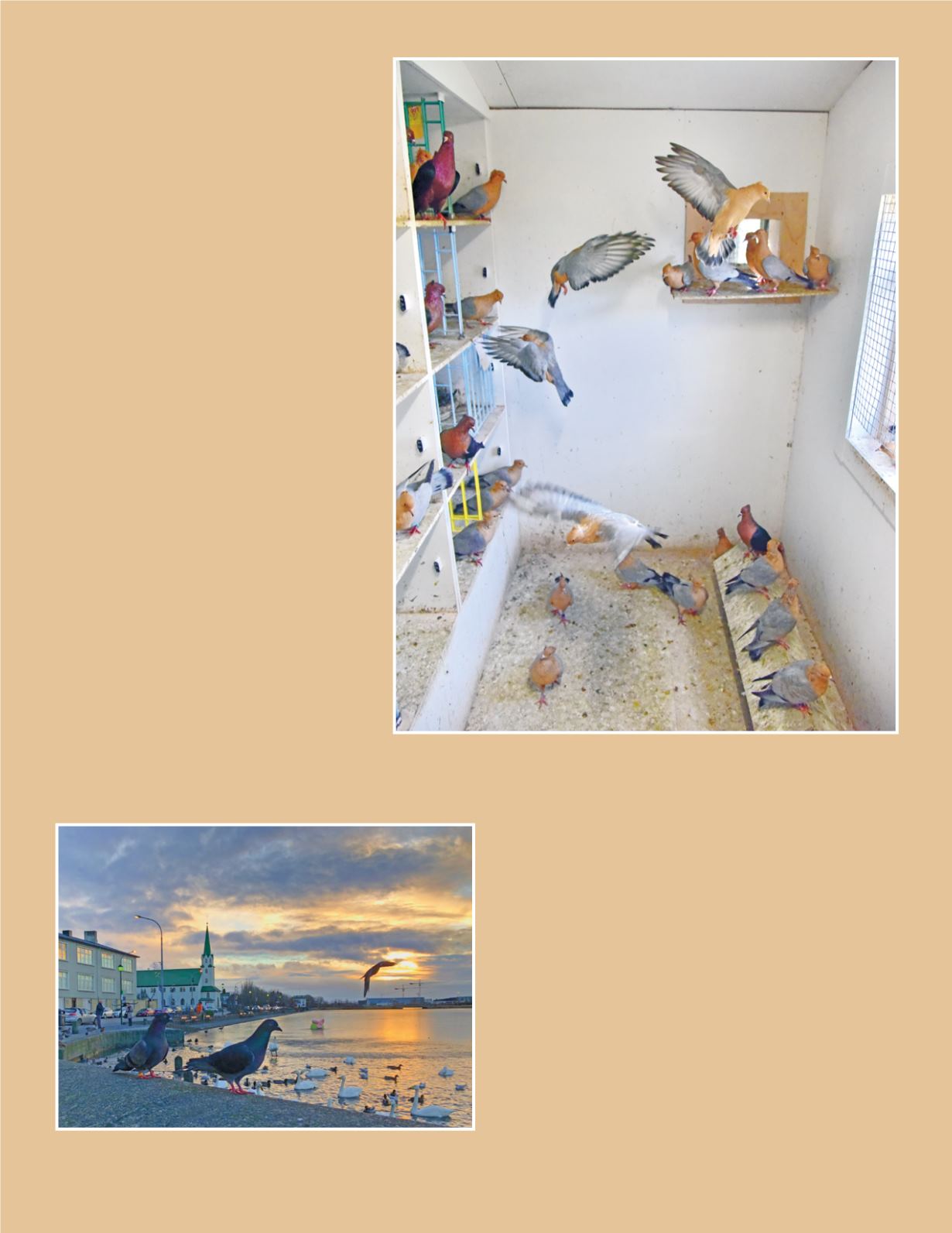
Gold Gimpels and Copper Gimpels (Archangels in the U.S.) in the loft of Magnús Magnússon.
Both of these breeds used to be bred in Iceland in the seventies and eighties but vanished
in the nineties when many of the old breeders quit. Few pairs were imported again from
Denmark in 2016 and Holland 2017 - photo by Olgeir Andresson
and that the birds cannot be evaluated in the same way as when they
are viewed on the spot, there are also exciting possibilities for such
shows which can give many people the opportunity to follow and
participate. In Iceland, there have been amateur pigeon shows over
the years, but mainly to promote the sport and as an opportunity for
breeders to meet, but never with judging.
Three times in the last 15 years, several pigeons have been
imported from Denmark to Iceland. There have also been several
imports from Holland: English Drummers, English Shortfaces, Indian
fantails, Jacobins and German Nuns, Danish Tumblers, Gothenburg
Tumblers, Barbs, Fantails, Voorburger Pouters, German Modenas,
Old German Owls and gold and copper Gimpels have been imported.
Twelve to fifty birds each time. In some cases, however, too few birds
of a breed have been imported. Imported birds can be very sensitive
and better not to import fewer than four pairs of the same breed.
As with other pets, there are those who like to breed and those
Feral pigeons at the Reykjavík pond. Located downtown Reykjavík.
Photo by Hjálmtýr Heiðdal
53 – Purebred PIGEON