


 36 / 68

West of England Tumblers – Page 36 – Purebred PIGEON
Breed of the Issue - West of England Tumblers
TheBeautyof theWhiteSelfWest
By Sandy Oelschlegel, Destiny Lofts - Vonore Tennessee
T
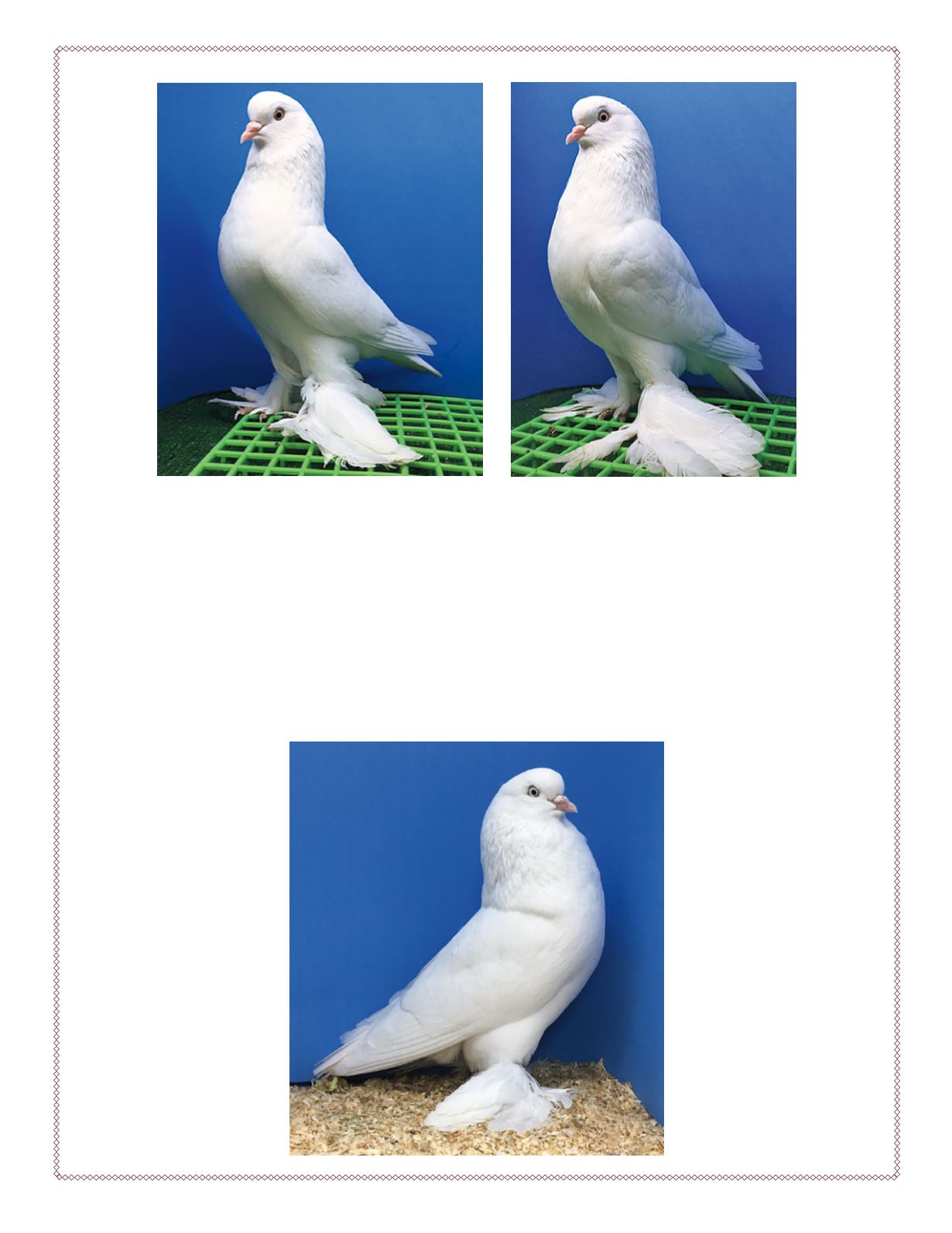
o me there is nothing more beautiful than a pure white
West of England Tumbler with a pearl eye and flesh colored
eye cere and beak. The challenge of breeding them and
keeping them white is not for everyone, but the beauty of the
variety has kept me engaged in breeding them since 2013.
White West are in the “self” division of West colors along with
black, red, etc. Self just means one solid uniform color pigeon.
When I first started breeding
them, I wondered where the color
white came from in West? I am
not a genetics master, so I rely on
the experts that have been in the
breed for longer than me. Accord-
ing to Bob Christman in his article
“Discussion on White in West’s,” “a
white pigeon is usually the result
of one of the following factors or
combination of factors: recessive
white, piebald whites, grizzle whites
or grizzle combined with piebald...”
He goes on to illustrate that al-
though those factors can be used to
make white pigeons, there are prob-
lems breeding from some of those
if your goal is to create white West.
For example, all recessive white
pigeons have “bull eyes,” which is a
disqualification according the white
self West standard. The whites produced from piebald factors also
have problematic eye color- because they have bull or cracked eye
color. According to Bob, the magic combination in making a white
self “from scratch” is to combine grizzle and baldhead marking. In
addition, using ash red or yellow also has good results.
Fortunately, you don’t have to make white West from
“scratch.” You can be successful for quite a few generations
breeding white to white. Some
tips on breeding white west would
include: do not breed from birds
with bull eyes. White West with
bull eyes are disqualified from
showing and this will haunt you
in future generations when the
perfect specimen is hatched but
has one or two bull eyes from a
distant relative. Birds with stained
beaks should also be avoided, since
the trait is definitely heritable,
and takes away from the look that
the standard calls for – “Beak and
eye ceres flesh colored”. Don’t cull
young birds with colored feathers
right away, most will actually molt
out completely white! Also, it is
important to keep the size down
on white west because, an optical
illusion exists that results in an