


 19 / 69

19 – Purebred PIGEON
A
ppearance
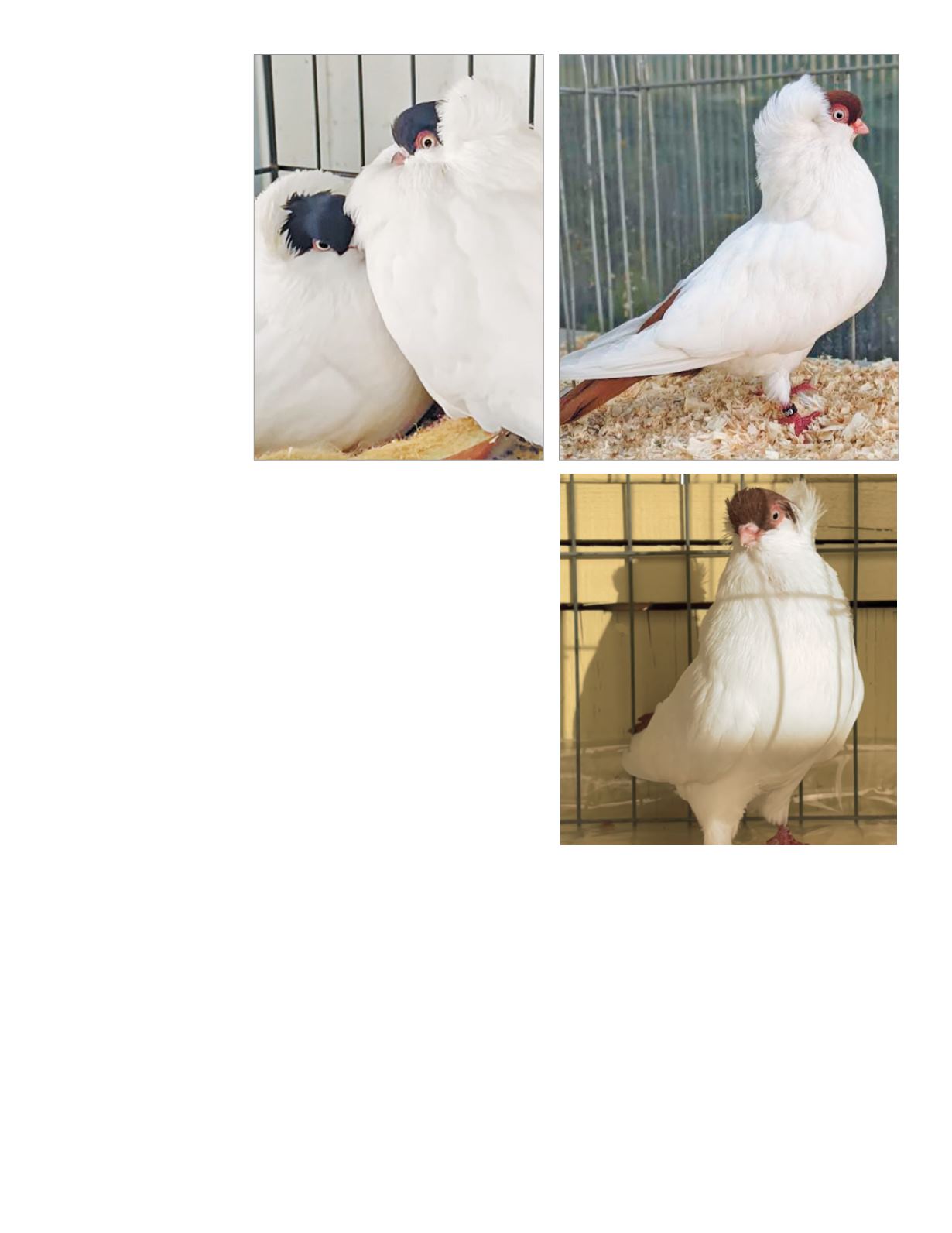
**1. Head and Crest: The
most defining feature of Hel-
met pigeons is their “Helmet”
crest. This crest is a tuft of
feathers that sits atop their
head, resembling a Helmet.
It gives the bird a distinctive
look that sets it apart from
other pigeon breeds. The crest
can be quite pronounced and
should be smooth and sym-
metrical, adding to the bird’s
overall elegance.
**2. Markings: Helmet
pigeons have a unique pattern
of coloration. Typically, they
are mostly white with colored
markings confined to the head
and on the tail. The head’s
coloring resembles a Helmet,
hence the name. Common colors for these markings include black, blue,
red, yellow, and silver. The contrast between the white body and the colored
Helmet and tail creates a visually striking appearance
**3. Body and Size: Helmet pigeons are medium-sized birds, with a
well-proportioned body. They have a compact and muscular build, with a
short tail and slightly rounded chest. Their legs are clean and free of feathers,
giving them a neat and tidy look.
**4. Eyes: Their eyes are typically bright and alert, adding to their expressive
and engaging appearance. The eye color can vary but is often a rich, vibrant
hue that contrasts nicely with their plumage.
B
ehavior
**1. Temperament: Helmet pigeons are known for their friendly and calm
demeanor. They are generally easy to handle and make excellent pets for
those who appreciate their beauty and gentle nature. They can be quite affec-
tionate with their owners, often enjoying human interaction.
**2. Intelligence: Like other pigeon breeds, Helmet pigeons are intelligent
birds. They can learn to recognize their owners and respond to calls. Their
smart and inquisitive nature makes them enjoyable to observe and interact
with.
**3. Social Behavior: Helmet pigeons are social birds and do well in pairs
or small flocks. They form strong bonds with their mates and are known for
their affectionate behavior, often seen grooming each other or sitting close
together.
C
are
**1. Housing: Helmet pigeons require a clean, spacious loft or aviary where
they can fly and exercise. The loft should be well-ventilated and protected
from harsh weather conditions. Perches and nesting boxes should be provid-
ed to meet their natural behaviors.
**2. Diet: A balanced diet is essential for the health of Helmet pigeons. They
should be fed a mix of quality pigeon grains, seeds, and pellets. Fresh vegeta-
bles and fruits can also be offered as supplements. Clean, fresh water should
always be available.
**3. Health: Regular health check-ups and a clean living environment are
crucial to prevent diseases. Helmets, like all pigeons,
should be monitored for signs of illness such as changes
in behavior, appetite, or droppings.
B
reeding
**1. Breeding Habits: Helmet pigeons are good breed-
ers, known for their strong parenting instincts. They
typically lay two eggs per clutch and both parents take
turns incubating the eggs and feeding the chicks.
**2. Selective Breeding: Breeders often select Helmet
pigeons for their distinct markings and crest quality.
Maintaining the breed’s standard involves careful pair-
ing to ensure the offspring exhibit the desired character-
istics.
E
xhibition
Helmet pigeons are a popular choice for pigeon shows